NATO Chief Scientist Research Reports.
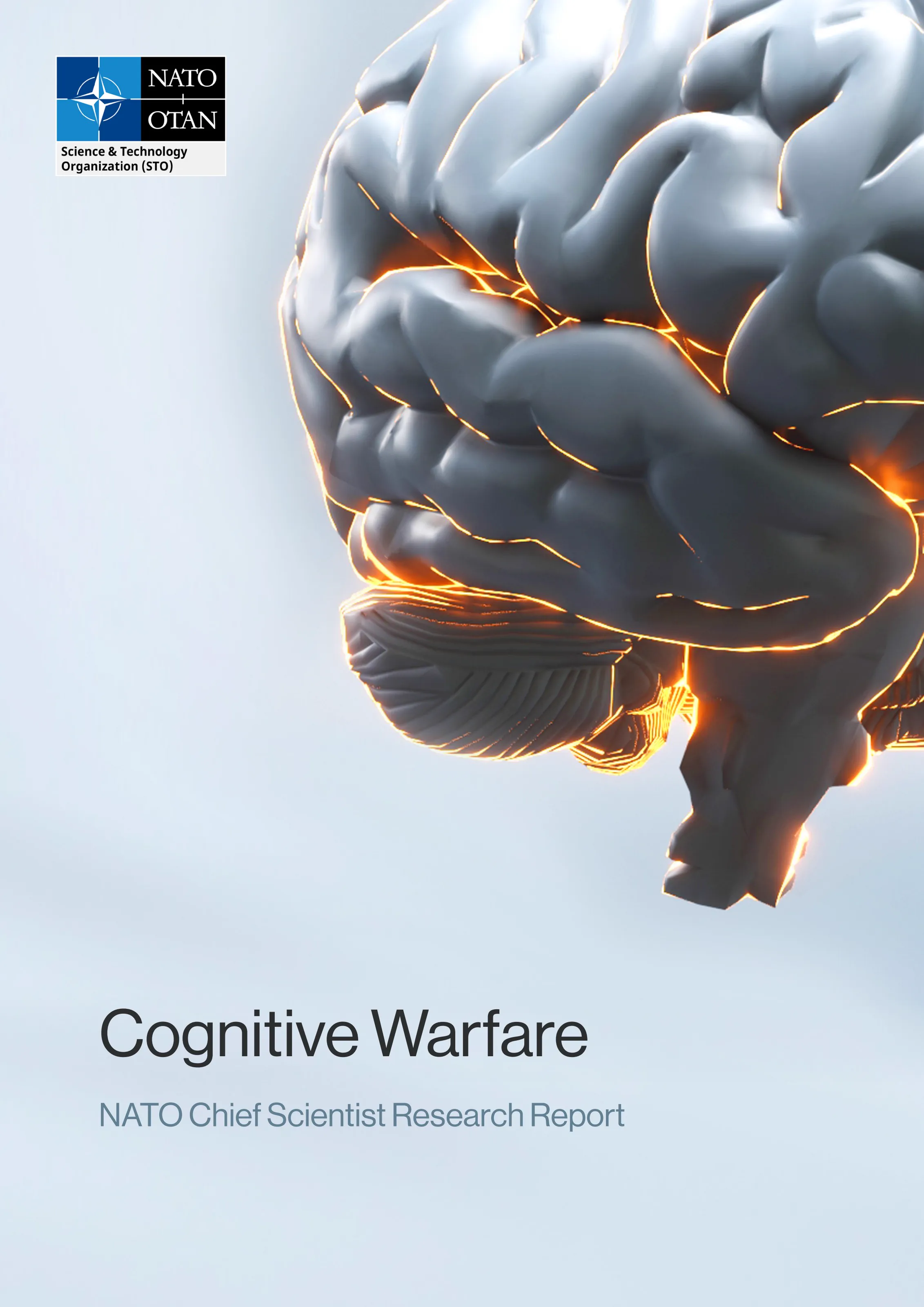
Two strategic research reports for NATO's senior political and military leadership — Cognitive Warfare and Resilience — built as a coherent two-volume series. We helped the Chief Scientist's office turn dense, multi-author research into clear, decision-grade publications.
- ClientNATO Science & Technology Organization
- SectorDefence · Public sector
- ScopeEditorial analysis · Information architecture · Report design system · Two-volume publication
- Year2025
NATO's Chief Scientist Research Reports translate the work of hundreds of scientists across 26 Allied and Partner Nations into evidence that can guide planning, policy and decision-making at the highest level of the Alliance. The first two volumes — on Cognitive Warfare and on Resilience — had to do something difficult: stay rigorously faithful to the underlying science, while becoming readable, navigable and visually authoritative for an audience of ministers, generals and senior diplomats who do not have time to wade through an academic monograph. The raw material was uneven by design — multiple contributing experts, layered NATO doctrine, fact boxes, baseline requirements, OODA loops, acronyms, annex tables. The brief was to make all of it land as one calm, confident voice from the Office of the Chief Scientist.
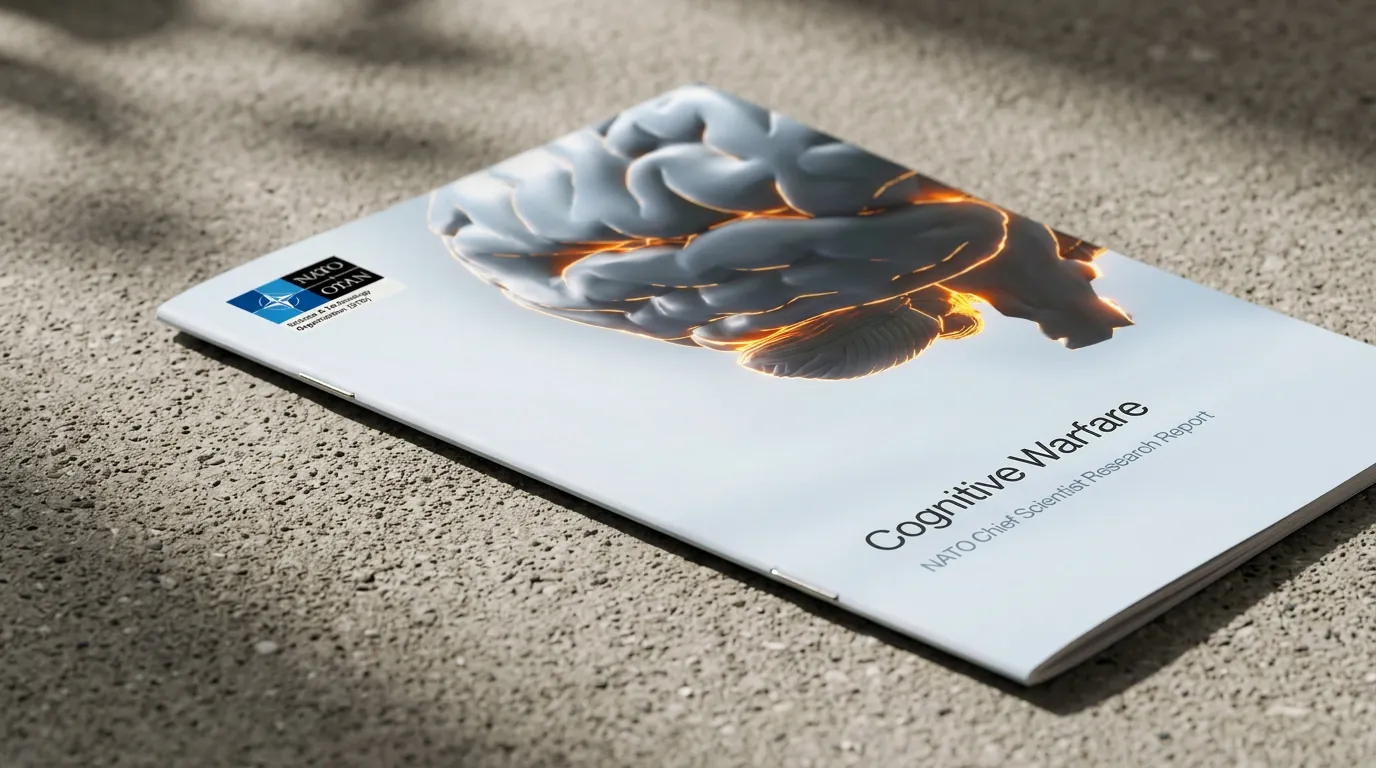
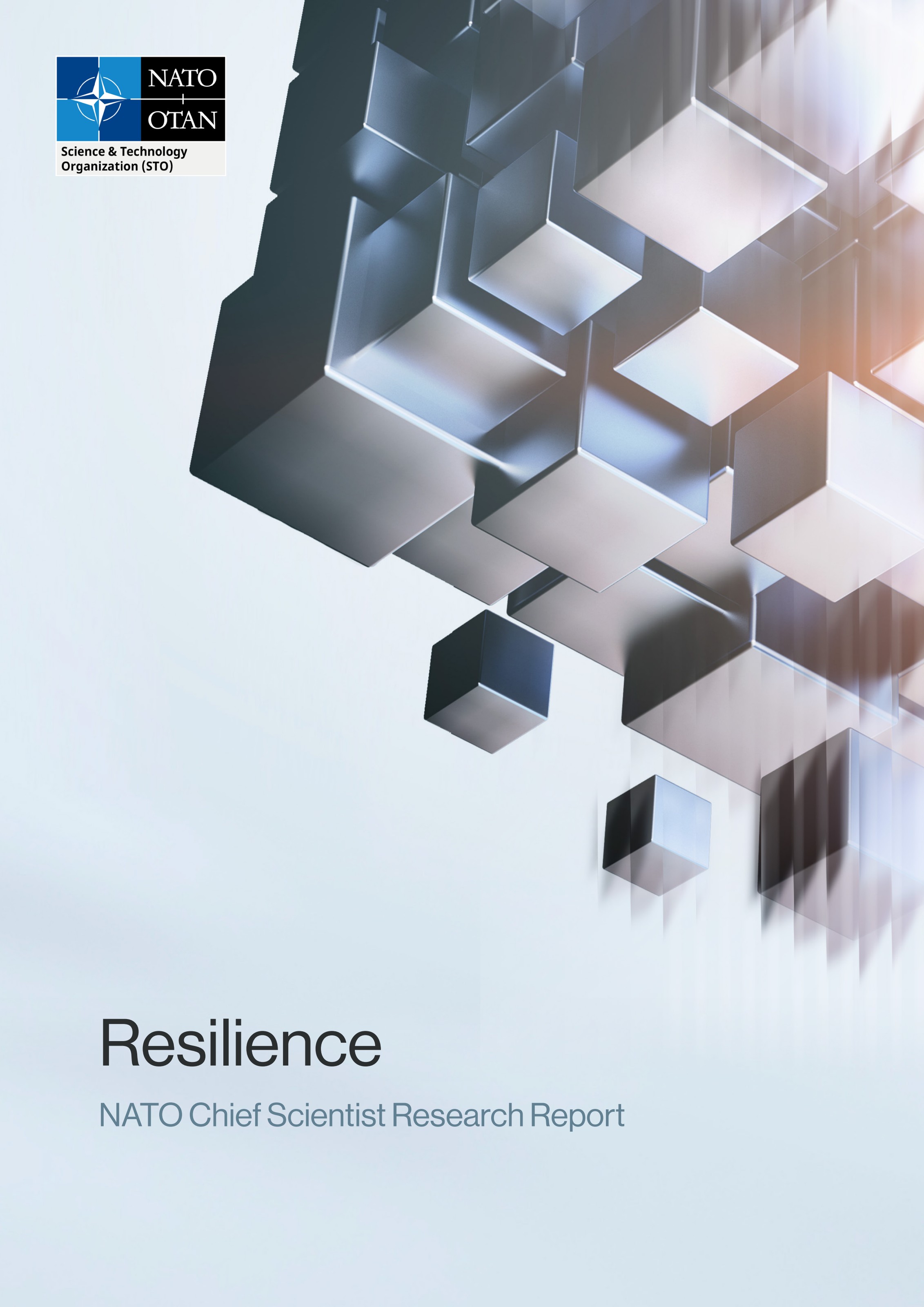
We worked alongside the Chief Scientist's team across three tracks. First, editorial analysis: reading every source, mapping arguments, surfacing the through-line each volume needed. Second, information architecture: rebuilding the table of contents around the reader's decision needs — strategic environment, NATO's approach, STO research, collaboration, conclusions — and pulling key concepts into self-contained fact boxes that a senior reader can lift in 30 seconds. Third, a shared design system. One typographic voice, one editorial grid, one restrained palette anchored on NATO's institutional blue with a single accent for emphasis. Forewords, fact boxes, diagrams (the House Model, the OODA decision cycle, the Seven Baseline Requirements matrix) and the dense annex tables all use the same building blocks — so the two volumes read as one series, not two design exercises. The result is two reports that look and behave like a single instrument of strategic communication, ready to scale to future volumes in the CSRR series.
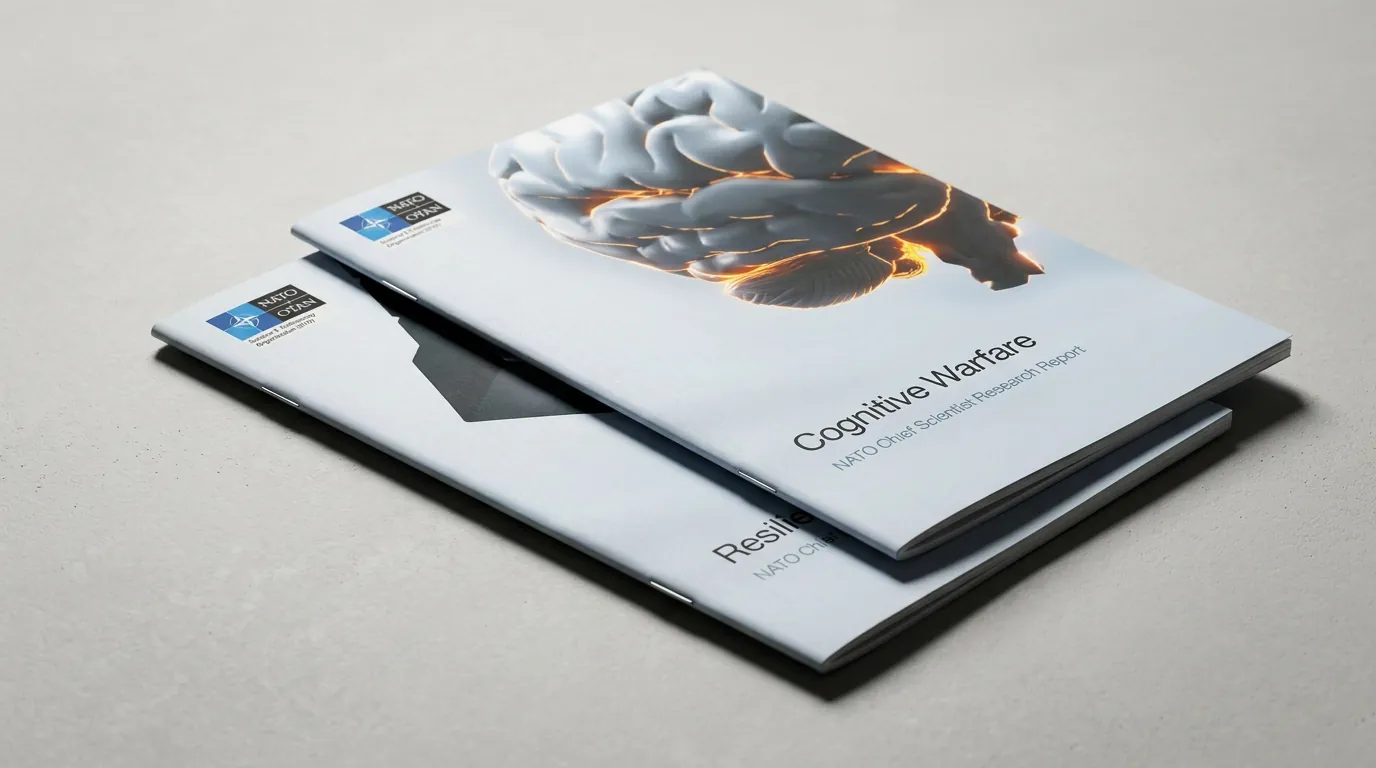
One system, two volumes. Cognitive Warfare and Resilience as a single instrument of strategic communication.
Cognitive Warfare.
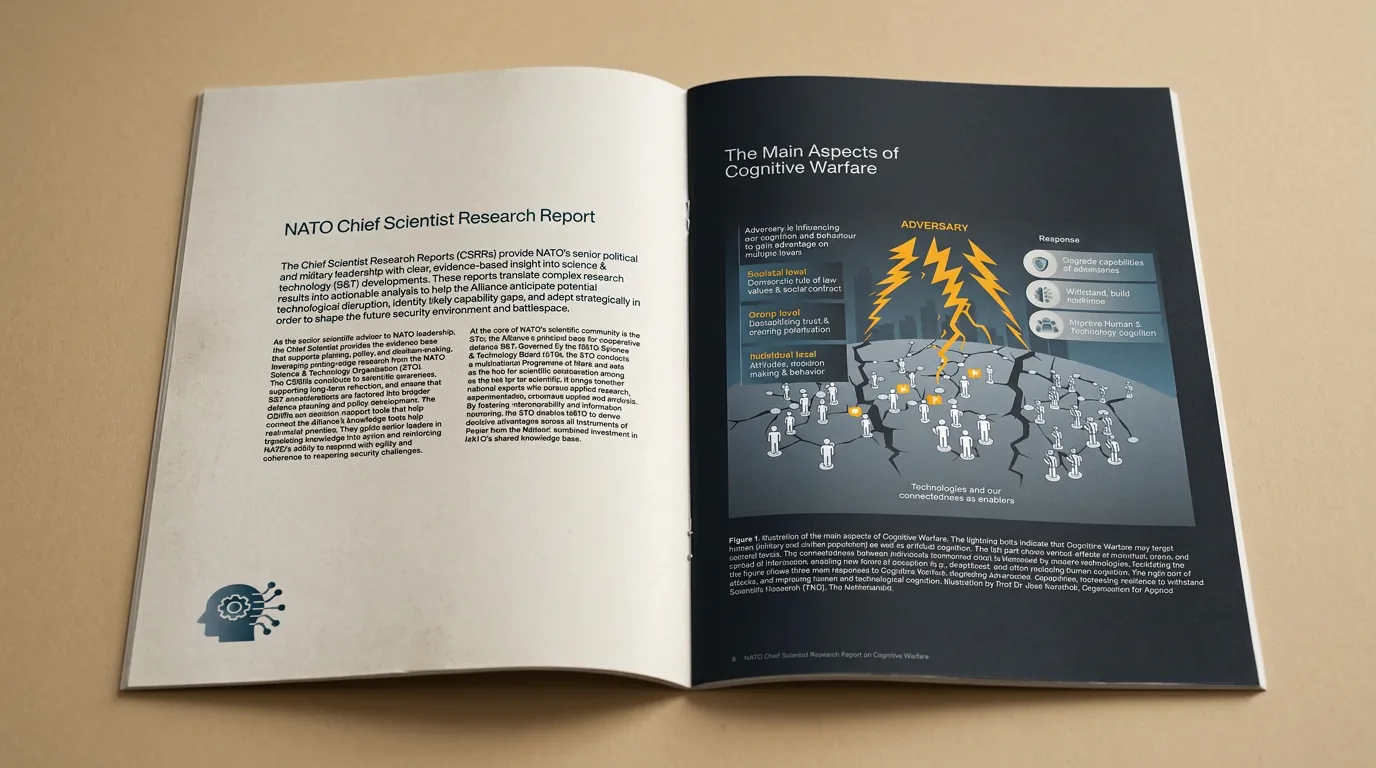
Twenty STO research activities. Two hundred experts. Twenty-six Allied and Partner Nations. The challenge was to give a senior reader a clear path into work spanning neuroscience, doctrine, AI, hybrid threats and the OODA decision cycle — without losing the rigour.
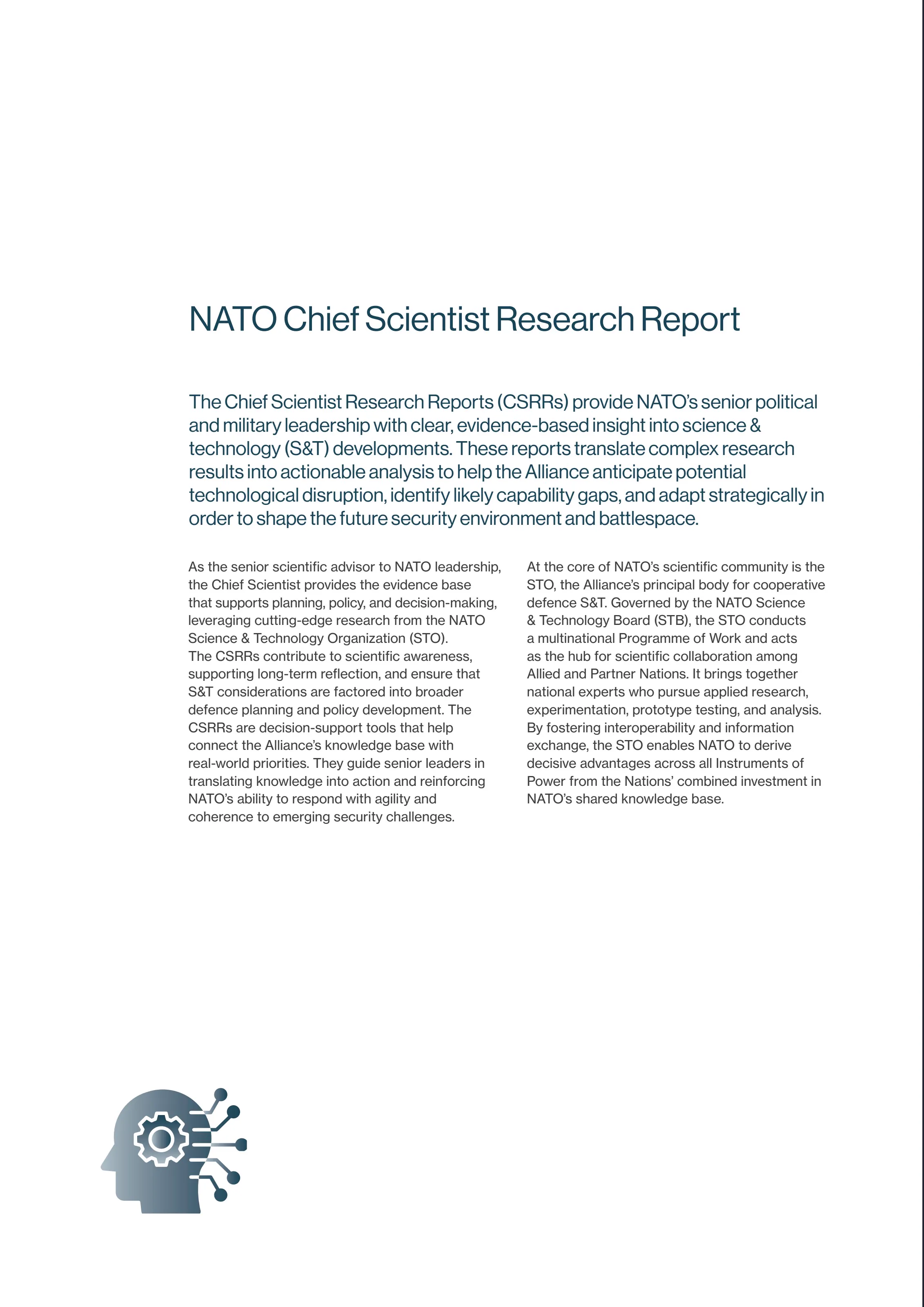
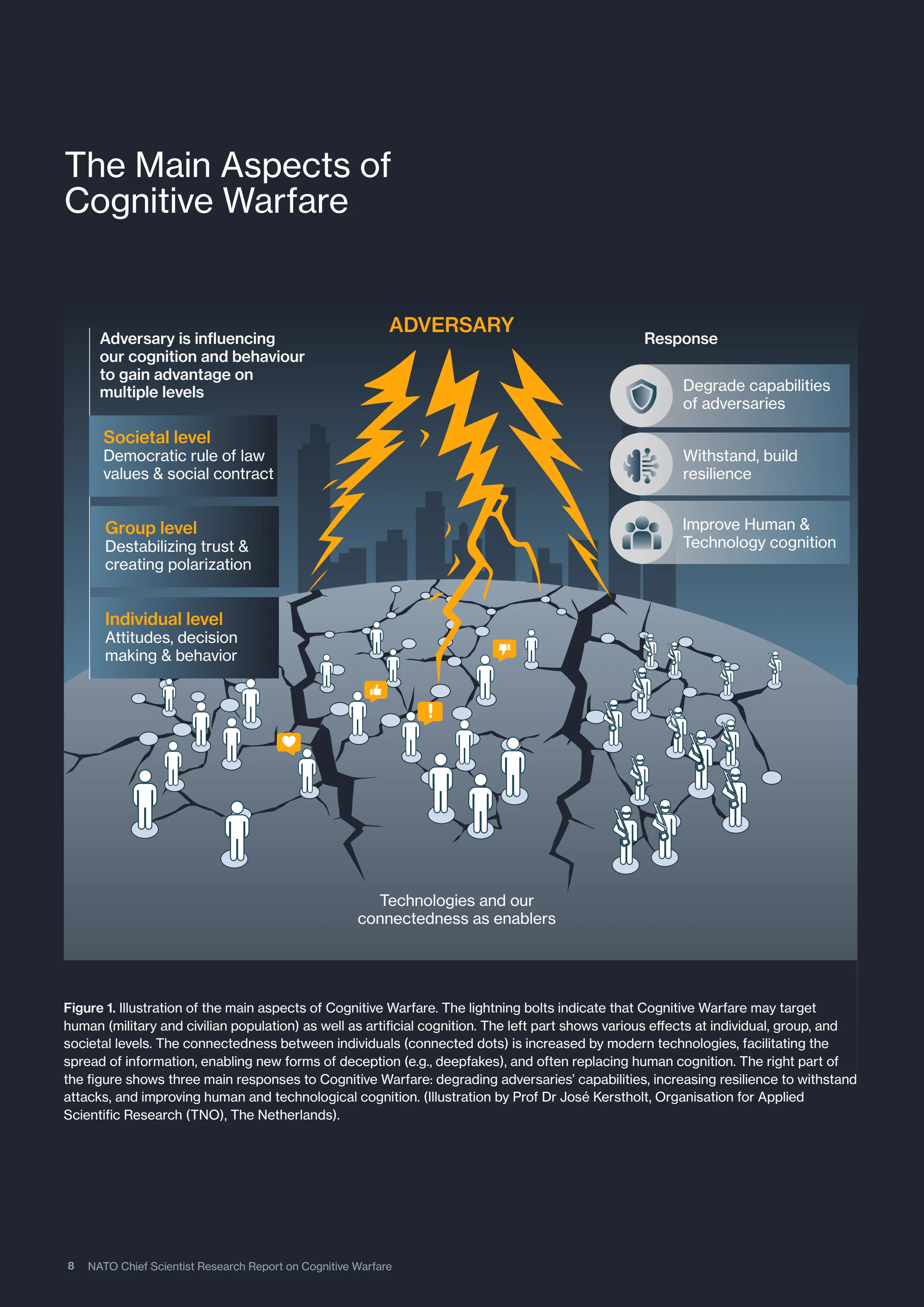
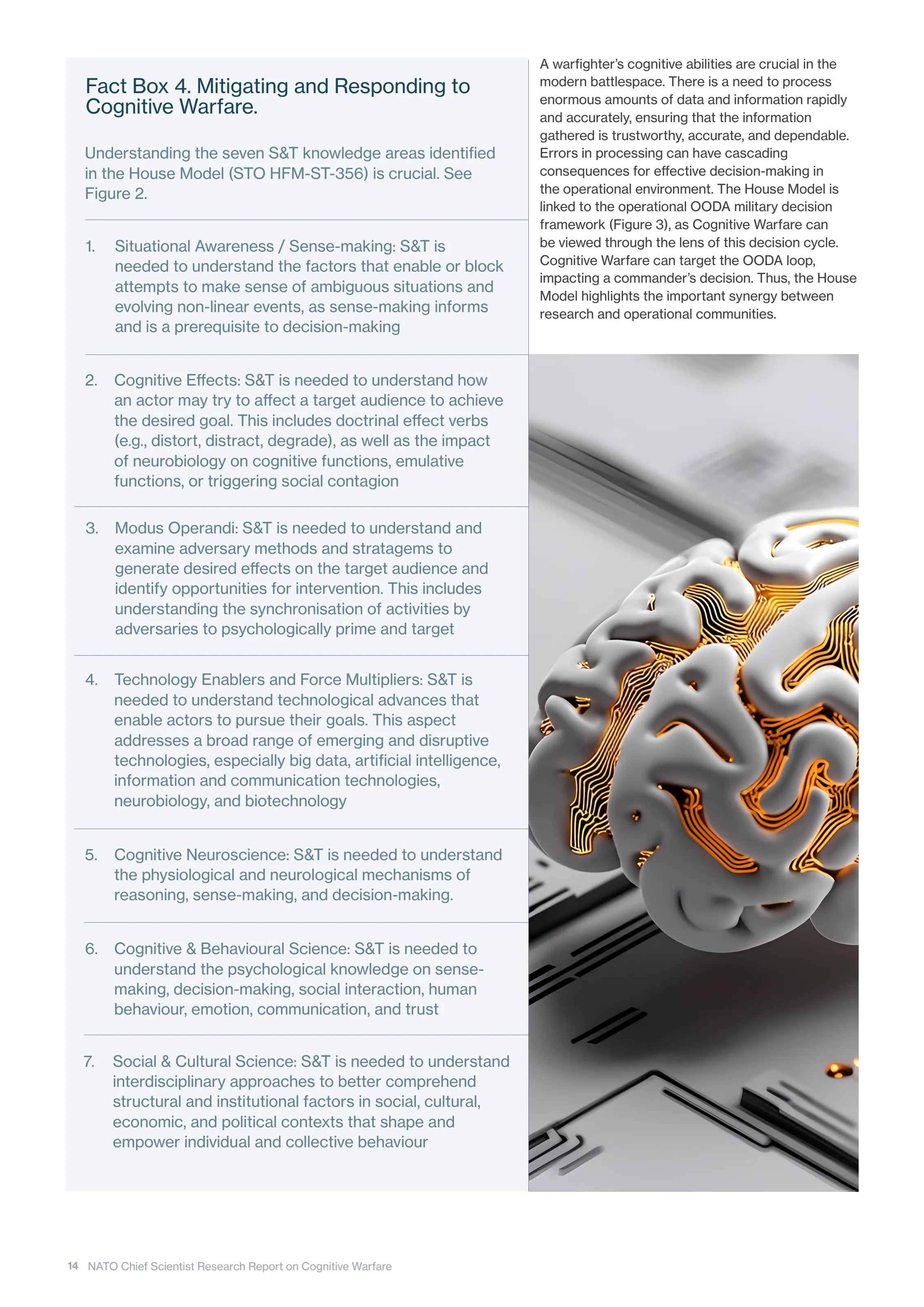
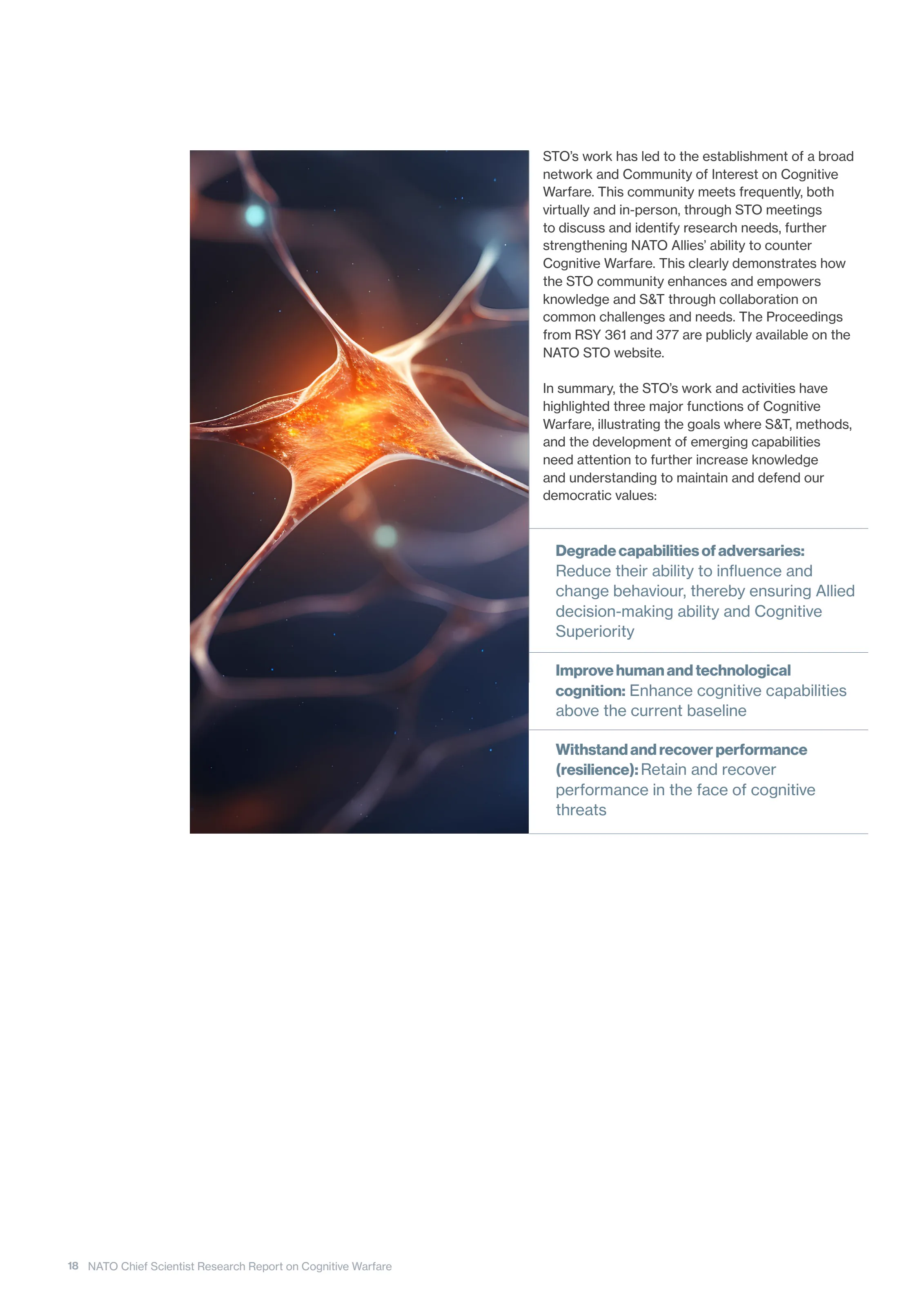
One typographic voice. One editorial grid. One restrained palette.
Built on NATO's institutional identity, the report system uses a single accent orange against a deep institutional blue. Forewords, fact boxes, diagrams and dense annex tables share one set of components — so the second volume could be produced faster, and the third can scale without a redesign.
- TypeEditorial serif + sans system
- PaletteInstitutional blue, single accent
- Grid12-col editorial, A4 print-first
- ComponentsForewords, fact boxes, diagrams, tables
- OutputPrint- and screen-ready PDF masters
#001F4D
#0A4FA0
#E0641E
Superiority.
Resilience.
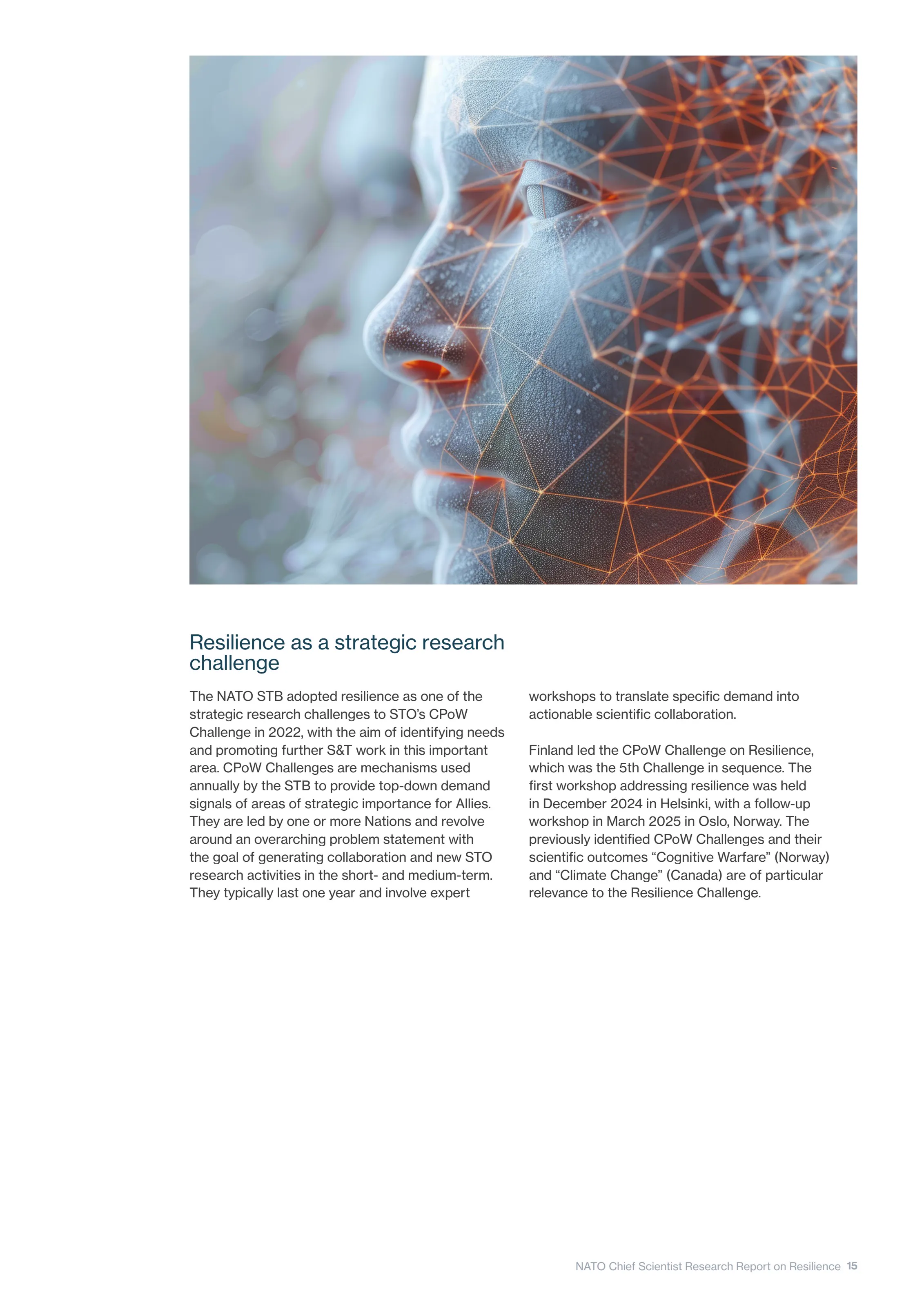
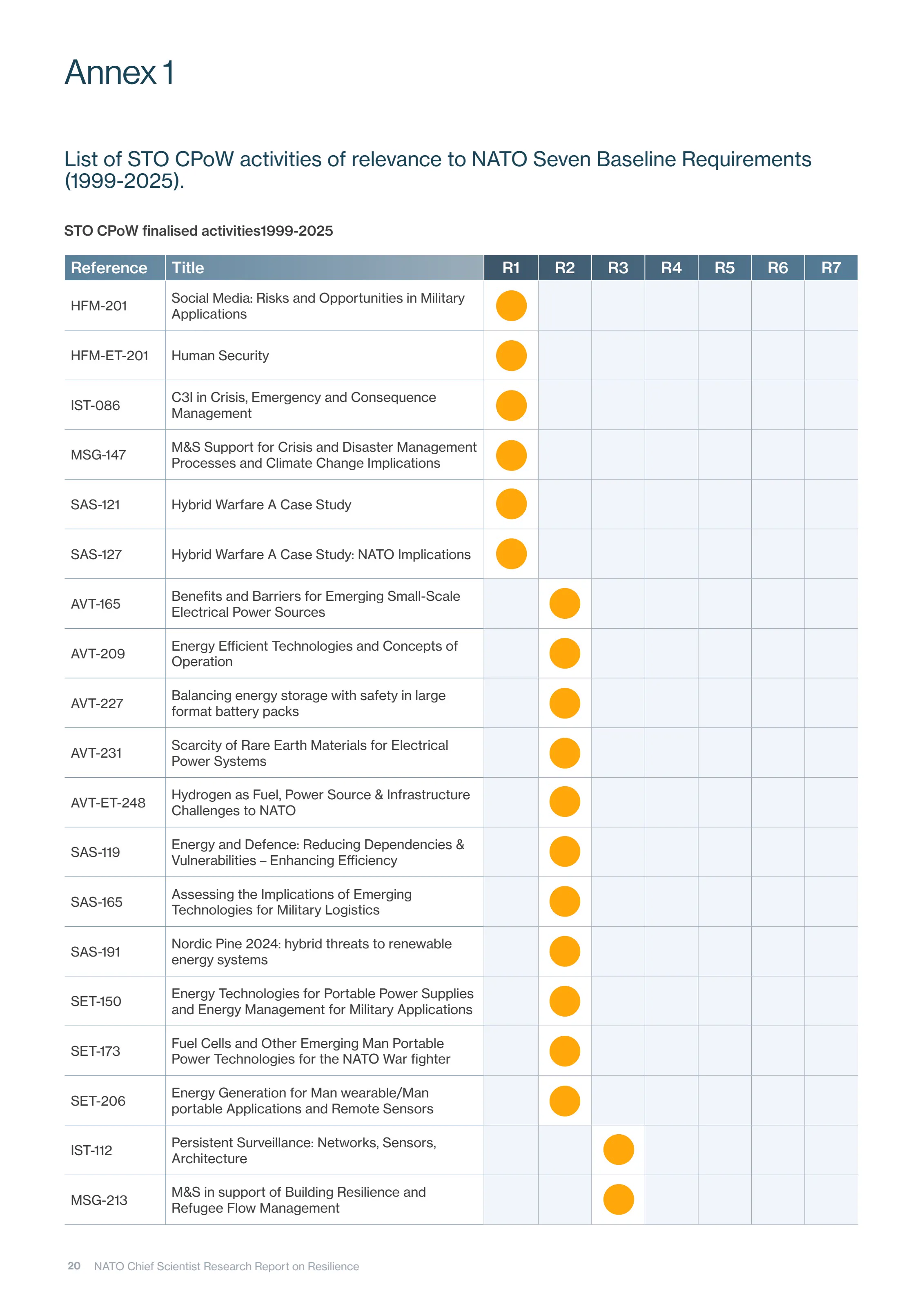
Resilience reaches across all seven of NATO's Baseline Requirements — from continuity of government to energy security to crisis communication. The volume needed to make a sprawling research portfolio feel navigable, with an annex that could be read as both reference and at-a-glance heatmap.
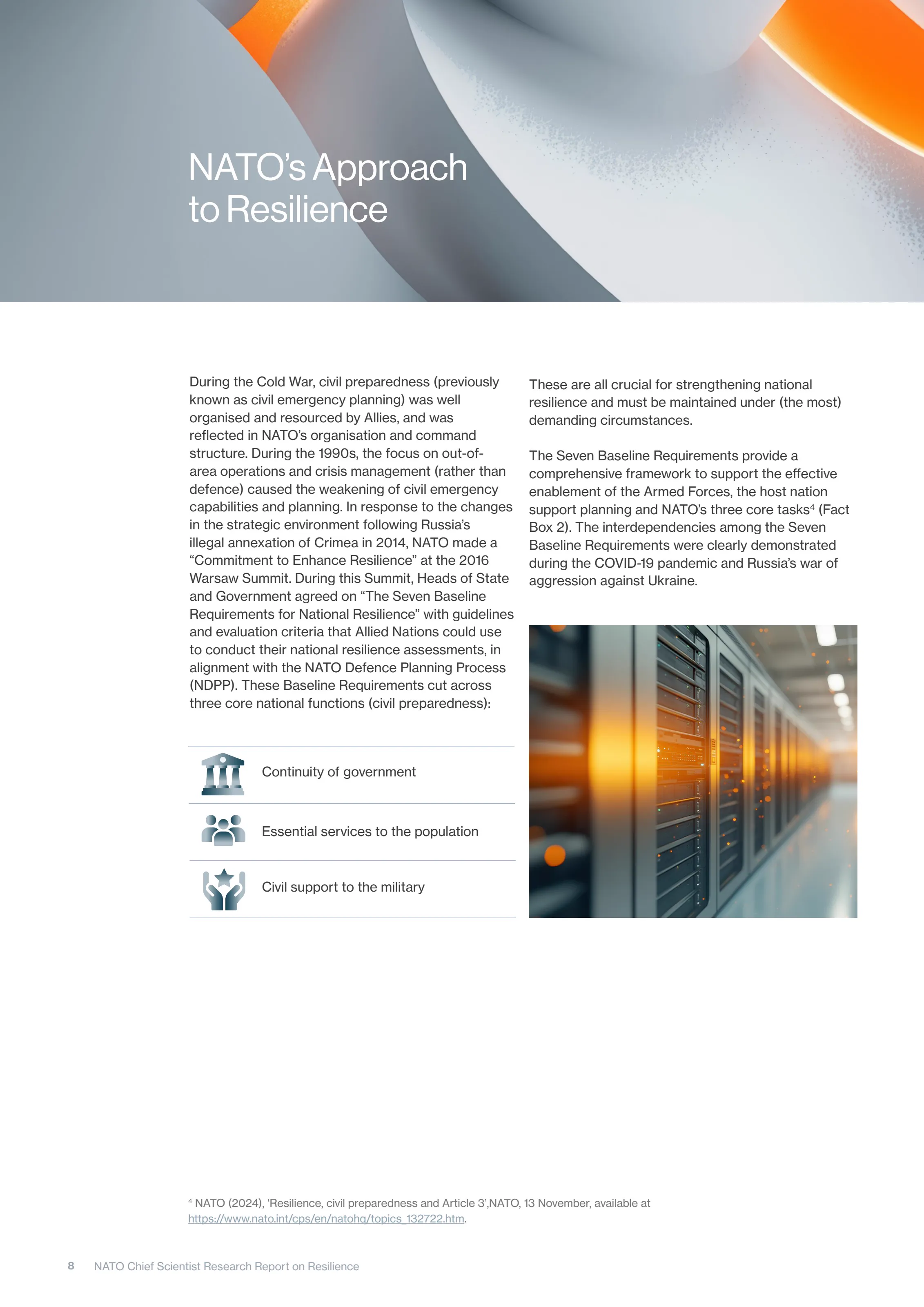
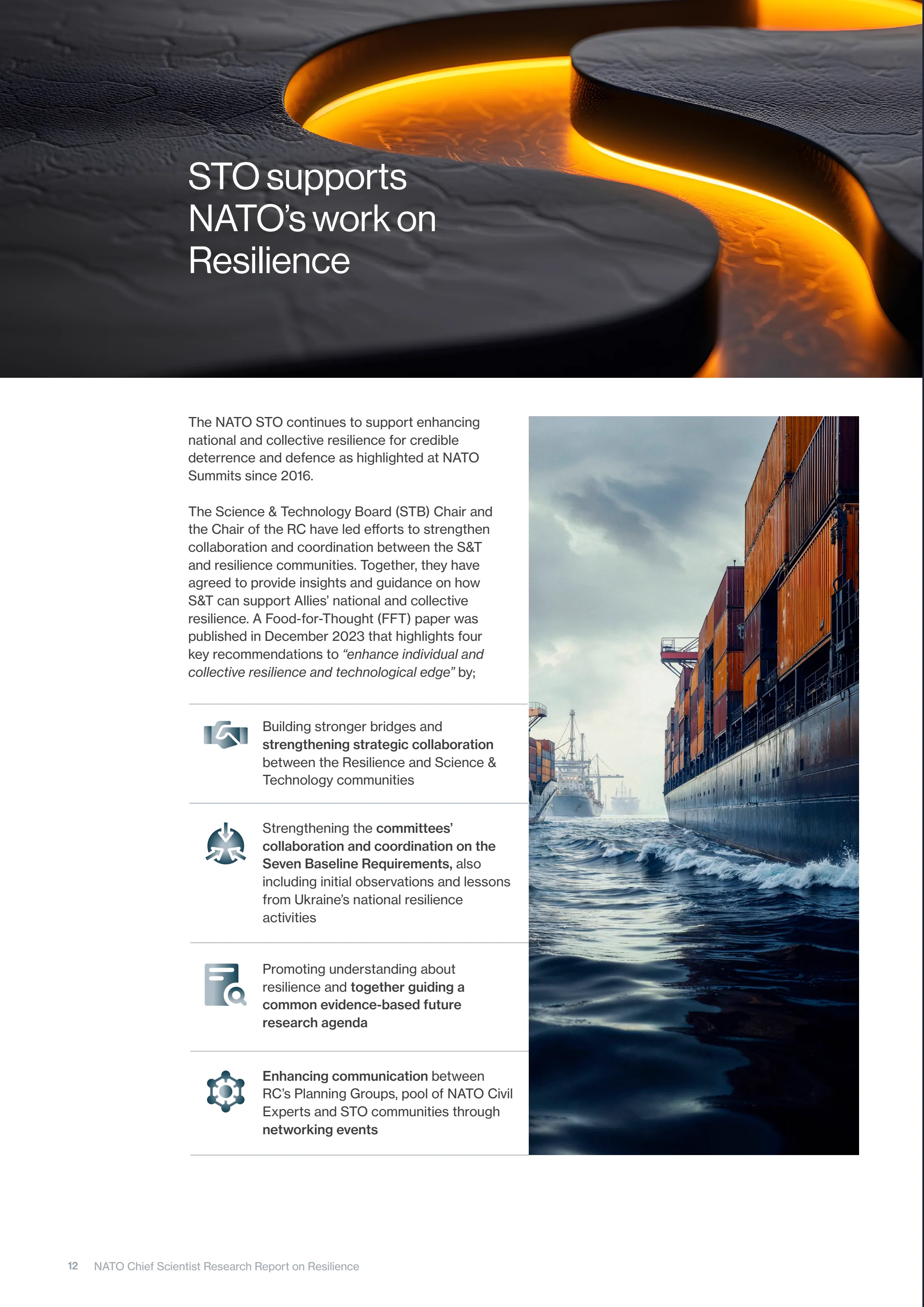
- 01Editorial analysis and structural rewrite of both volumes.
- 02Information architecture and table-of-contents redesign.
- 03Two-volume design system — typography, grid, palette, fact boxes.
- 04Diagrams: House Model, OODA loop, Seven Baseline Requirements.
- 05Cover system and visual identity for the CSRR series.
- 06Layout and typesetting of both 24-page reports.
- 07Print- and screen-ready PDF masters.
“A clear, calm decision-support voice for NATO's most senior leadership — and a repeatable design system the Chief Scientist's office can extend volume by volume.”